The testing happens. The results don't reach you.

Thomas Vares, a Montreal shopper, trusted government food testing. He assumed someone was checking the fruit on his grocer’s shelves, and that he’d be told if something was wrong. Then he learned that Canadian inspectors had found pesticide residues above legal limits on Driscoll’s berries sold here between 2022 and 2024. He told CBC he won’t buy the brand again. What bothered him most was how he found out: from the news, years later, not from the government.
That’s the problem in one sentence. Canada tests its food. The results just don’t reach the people eating it.
What happened with Driscoll’s
The Canadian Food Inspection Agency confirmed that testing on Driscoll’s berries sold in Canada from 2022 to 2024 found residues above the legal maximums, including bifenthrin, iprodione and captan. Some of those investigations began after people reported a chemical taste or smell. The CFIA says the reported illnesses were not conclusively linked to the fruit.
Most Canadians heard about this only because of a lawsuit. David Harada was Driscoll’s director of food safety and regulatory compliance for the United States and Canada. In a lawsuit filed in California in June, he alleges that about half the company’s exports to Canada between 2022 and 2024 were over Canadian limits. He puts the value of those potentially affected berries at nearly US$100 million. He also alleges that Driscoll’s shut down its system for tracking compliance with Canadian rules in 2022.
The lawsuit describes emails with the CFIA in May 2024 about strawberries with a strong smell, and a consumer who reported dizziness and headaches after eating them. A proposed Quebec class action now seeks to cover anyone who bought Driscoll’s berries in the province since January 1, 2022.
Driscoll’s disputes the allegations, and none of them have been proven in court. But the CFIA’s findings aren’t allegations. The agency found the violations. Shoppers found out from a lawsuit.
The government tests. Here’s what it tells you.
In June 2026, the CFIA published its chemical residue monitoring report for 2022–23. It covered more than 110,000 tests on about 15,500 samples of dairy, produce, honey, eggs, meat, maple products and seafood. Overall, 97.5% of samples complied with Canadian standards.
That’s a strong result. It’s also a report on food collected through March 2023, released more than three years later.
Think about how many grocery trips you’ve made in three years.
When the CFIA looks harder, it finds more. That same year it started testing honey for glyphosate and related pesticides. Compliance for Canadian honey fell to 93.9%, mostly because of the new tests.
Where your food comes from matters too. In the 2021–22 report, imported fresh fruit and vegetables had a compliance rate of 94.7%, compared with 98.9% for domestic produce. For that report, the CFIA posted a public summary. The complete report is available only if you ask for it.
What the reports never tell you is which products failed. The CFIA’s 2015–16 glyphosate survey found the herbicide in 29.7% of food samples, with 1.3% over the legal limit. It named no brands and didn’t say which products were over. It didn’t publish the amounts found either, so there was no way to learn how much glyphosate turned up in, say, a granola bar.
Someone choosing between two bags of oats can’t do it with a national percentage.
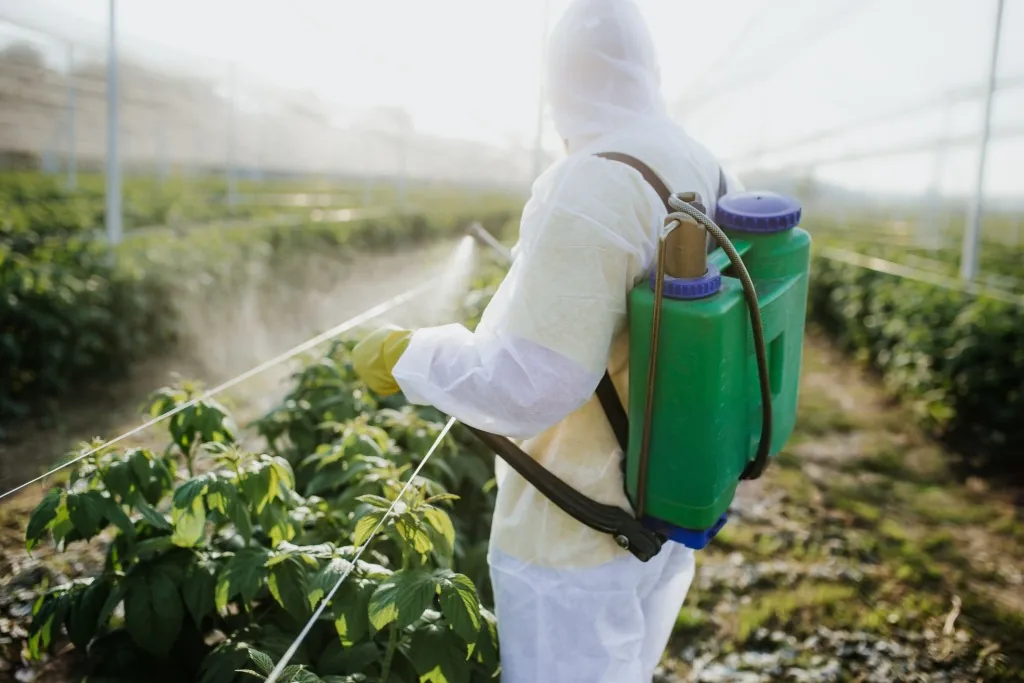
Telling the public has always been optional
In 2009, a CFIA recall specialist told the Globe and Mail there were no hard-and-fast rules on what had to be made public. Records released under an Access to Information request showed that between 2000 and early 2008, the CFIA issued 29 recall notices for bottled water, but warned the public in only seven of those cases.
That was years ago. The Driscoll’s file suggests the same discretion is still at work. Residues were over the legal limit, the agency followed up with the company, and shoppers heard nothing while the berries were on the shelf.
Seven years inside the system
Delays like this aren’t unique to Canada. In 2002, a USDA microbiologist named Gerald Zirnstein toured a beef processing plant during a contamination investigation. Afterward, in an internal email, he called the ammonia-treated beef filler “pink slime” and said putting it in ground beef was fraudulent labelling.
The email stayed inside the USDA for years. The public only saw it when the New York Times obtained it through a Freedom of Information request for a 2009 investigation. Between 2005 and 2009, school lunch testing had found the filler positive for salmonella four times as often as regular ground beef, and the USDA kept buying it because it was cheaper. By 2012, about 70% of ground beef in US supermarkets contained it.
The ammonia-treated version was never approved for sale in Canada. Health Canada treats the ammonia process as a food additive, which needs approval, and as of 2012 nobody had applied. The point for Canadians isn’t what’s in Toronto beef. It’s the seven years between a government scientist raising the alarm and the public hearing about it.
Legal, labelled, and easy to miss
Transglutaminase, sold as “meat glue,” binds small pieces of meat into one larger piece. Health Canada approved it in 2004 after a pre-market review. In 2016, Health Canada’s own scientists raised a concern: formed meat can look like a whole steak, so someone might cook it rare or medium-rare, even though bacteria from the original surfaces are now inside the piece. Health Canada proposed removing the approval for those products. In 2017 it kept the approval instead and said it would look at labelling.
The CFIA requires the label on the package. You won’t see it on a restaurant menu or a banquet plate.
What “compliant” doesn’t tell you
Compliant doesn’t mean nothing was found. It means the amount was under a limit, and the limits themselves are debated. Consumer Reports reviewed years of US government residue data and found that 20% of 59 common conventional fruits and vegetables posed a high pesticide risk. Blueberries were among them: one in five samples of conventional US-grown blueberries carried phosmet, a pesticide the EPA considers a particular risk to children.
Context matters both ways. The CFIA’s 2023–24 survey found at least one toxic metal in 69% of 957 samples, but those samples came from just four categories: cassava products, salt, balsamic vinegar and bottled water. None of the bottled water had detectable metals, and Health Canada found no health concern in any of the samples.
A detection isn’t automatically a danger. You should still be able to see the number and decide for yourself.
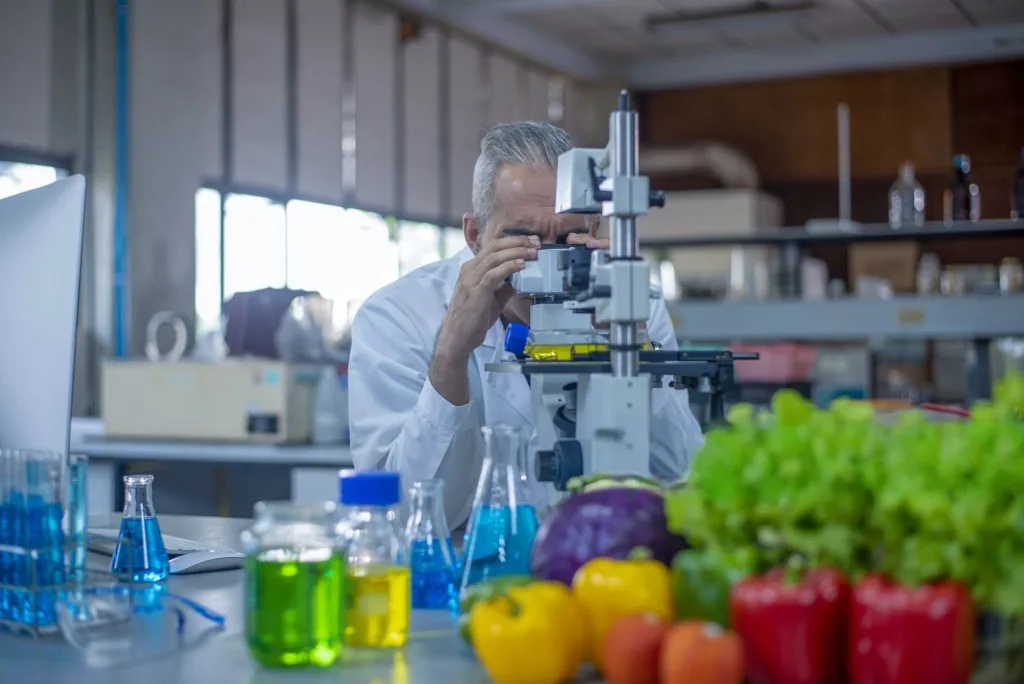
What Button Health is going to do
We’re building a lab-tested list of everyday foods from local suppliers: the meat, produce and water you buy every week, not niche imports.
Here’s how it will work:
- We buy off the shelf. Samples are bought at retail, the same way you shop. Suppliers won’t hand us their own samples.
- An independent lab does the testing. We’ll use an ISO/IEC 17025 accredited laboratory.
- We test for what builds up. That means pesticide residues including glyphosate, the heavy metals lead, cadmium, arsenic and mercury, and contaminants such as PCBs where the food calls for it. Hormone testing will focus on beef, because six growth hormones are approved in Canada and only for beef cattle.
- We show the actual numbers. For each sample: the product, the store, the purchase and test dates, the amounts found, and the Canadian limit where one exists. That includes results where nothing was detected.
- We retest. One sample isn’t a permanent verdict on a brand, so the staples get retested over time.
We won’t be testing for E. coli or listeria. Those change batch to batch, and Canada’s recall system is built for them. Our focus is the slow, chronic exposure that a recall never covers.
Part of the membership
Access to our food testing results will be part of Button Health’s optional $15-a-month membership, along with online booking, secure messaging, and your results and visit notes in one place. A bloodwork dashboard is coming soon. OHIP-covered care at Button Health doesn’t require a membership.
The government should be publishing this kind of product-level information. Until it does, we’ll buy the samples, pay for the testing and put the results where our members can use them.
The testing happens. It’s time the results reached you.
Explore the Button Health membership.
Sources
- CBC, Driscoll’s case and Thomas Vares: cbc.ca/news/canada/montreal/driscolls-berries-case-raises-questions-about-canadas-food-safety-watchdog-9.7374947
- The Cool Down, CFIA findings and response: thecooldown.com/?p=799554
- CTV News, Harada allegations, US$100 million estimate and Quebec class action: ctvnews.ca/montreal/article/quebec-class-action-alleges-driscolls-berries-exceeded-canadian-chemical-limits/
- HortiDaily, compliance system discontinued and Driscoll’s response: hortidaily.com/article/9880487/driscoll-s-faces-class-action-lawsuit-over-berry-pesticide-residue-claims-in-canada/
- KEYT, May 2024 CFIA emails: keyt.com/news/ventura-county/2026/07/08/former-employee-alleges-driscolls-violated-pesticide-safety-laws-and-tried-to-cover-it-up/
- CFIA, 2022–23 monitoring results release (June 2026): canada.ca/en/food-inspection-agency/news/2026/06/canadian-food-inspection-agency-testing-shows-strong-food-safety-in-canada.html
- Food Safety Magazine, 2022–23 results and honey: food-safety.com/articles/11504-canadian-monitoring-of-baby-foods-finds-100-percent-compliance-with-chemical-contaminant-limits
- Food Safety Magazine, 2021–22 import vs domestic rates: food-safety.com/articles/10090-latest-data-shows-977-percent-of-canadian-food-is-compliant-with-chemical-residue-standards
- CFIA, 2021–22 report (full text on request): inspection.canada.ca/en/food-safety-industry/food-chemistry-and-microbiology/testing-reports-and-journal-articles/2021-2022-ncrmp-report
- CBC, glyphosate survey: amp.cbc.ca/lite/story/1.4070275
- Western Producer, missing concentration data: producer.com/farm-family/cfia-downplays-gylphosate-residue-findings-in-food/
- Barfblog, citing the Globe and Mail on bottled water and notification rules: barfblog.com/2009/03/canadian-food-safety-there-are-no-rules-on-informing-the-public/
- Food Safety News, pink slime timeline: foodsafetynews.com/2012/09/bpi-and-pink-slime-an-updated-timeline/
- Carey Gillam (Reuters), Zirnstein and the FOI release: careygillam.com/articles/article/scientist-who-coined-pink-slime-reluctant-whistleblower
- Mother Jones, school lunch salmonella testing: motherjones.com/?p=166561
- Manitoba Co-operator, Canadian status (2012): manitobacooperator.ca/?p=45747
- CTV News, transglutaminase approval in Canada: ctvnews.ca/sci-tech/meat-glue-an-ingredient-to-fear-or-cheer-1.855985
- Health Canada, 2016 transglutaminase proposal: canada.ca/en/health-canada/services/food-nutrition/public-involvement-partnerships/proposal-remove-cut-solid-meat-with-without-added-phosphate-salts/consultation.html
- Health Canada, 2017 decision: canada.ca/en/health-canada/services/food-nutrition/public-involvement-partnerships/modification-remove-solid-cut-meat-with-without-added-phosphate-salts.html
- Health Canada, hormonal growth promoters: canada.ca/en/health-canada/services/drugs-health-products/veterinary-drugs/factsheets-faq/hormonal-growth-promoters.html
- Consumer Reports, pesticides in produce: consumerreports.org/health/food-contaminants/fruits-and-vegetables-loaded-with-pesticides-a2508510840/
- CFIA, toxic metals in selected foods 2023–24: open-science.canada.ca/items/58939906-f2c6-4cec-ad9b-e3f1249fe4c3