Bluetooth Headsets and Thyroid Nodules Potential Link
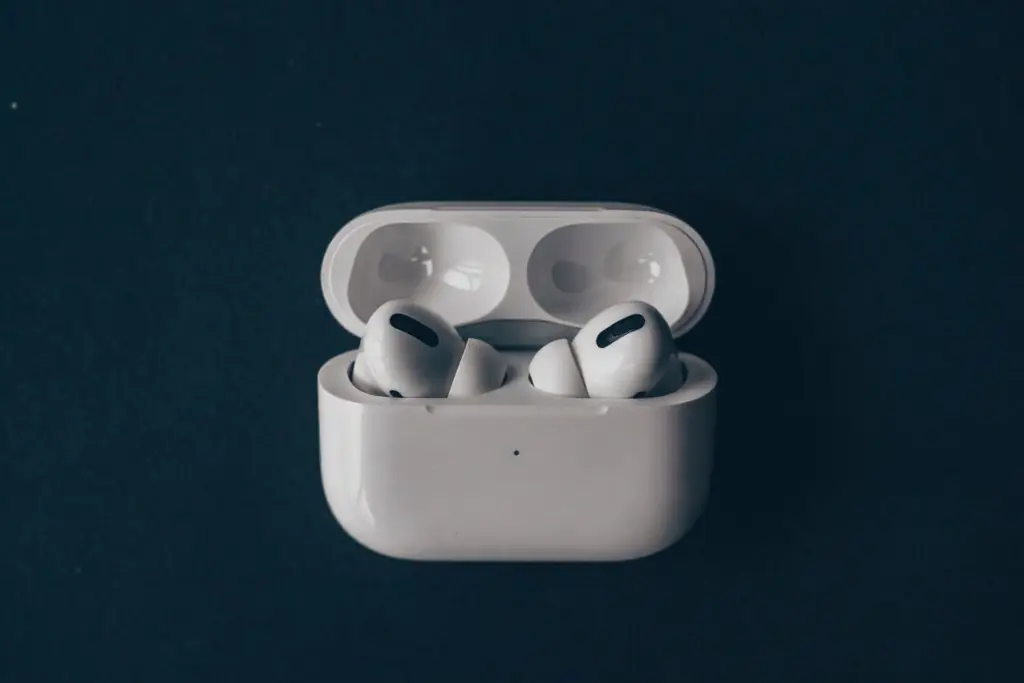
Somewhere around 65% of adults over 50 have at least one thyroid nodule if you look hard enough with ultrasound. Most of them will never know. Most of them don’t need to know, because the vast majority of thyroid nodules are benign and clinically irrelevant. But a 2024 paper in Scientific Reports asked an unusual question: does the amount of time you spend wearing Bluetooth headsets have any statistical relationship to whether you develop these nodules? The answer they got was interesting enough to be worth talking about, and messy enough to deserve honest treatment.
The study, led by researchers in China and published in June 2024, surveyed 600 people through the WenJuanXing platform (a widely used Chinese survey tool, roughly analogous to SurveyMonkey), collected data on their Bluetooth headset habits, and then used machine learning to identify which factors most strongly predicted thyroid nodule status. Daily usage duration came out on top. That’s a finding that lands right in the uncomfortable space between “probably nothing” and “worth paying attention to,” and the methodology is clever enough that understanding what the researchers actually did matters as much as the headline result.
What the Researchers Actually Did
The study started with 600 completed questionnaires. Participants reported whether they’d been diagnosed with thyroid nodules, how long they used Bluetooth headsets each day, what kind of headset they used (in-ear, neckband, or over-ear), what they mainly used them for, and basic demographic information like age. Among Bluetooth headset users in the sample, 12.2% reported having been diagnosed with thyroid nodules, and 65.5% of all participants reported regular headset use.
Raw comparisons between people with and without nodules would be unreliable here because the two groups could differ in all sorts of ways that have nothing to do with headsets. Older people are more likely to have nodules. People with certain jobs might use headsets more. To control for this, the team used propensity score matching, a statistical technique that pairs individuals from each group who are as similar as possible on measured characteristics. After matching, they had 96 people: 48 with diagnosed thyroid nodules and 48 without, balanced on confounding variables. This is a legitimate approach, and it’s the right instinct for this kind of observational data. But 96 people is a small matched sample, and the balancing can only account for variables that were actually measured.
With the matched dataset in hand, the researchers trained an XGBoost model, a type of gradient-boosted decision tree that’s become a workhorse in applied machine learning, to predict thyroid nodule status from the survey variables. The model performed well, hitting an area under the ROC curve (AUC) of 0.95. That’s a very high discrimination score, meaning the model could reliably distinguish between nodule and non-nodule cases in this sample. Then comes the part that gives the paper its name: they used SHAP values, or Shapley Additive Explanations, to crack open the model and figure out which features were actually driving the predictions.
SHAP Values and Why They Matter Here
SHAP analysis borrows a concept from cooperative game theory. Imagine you’re trying to figure out how much each player on a team contributed to winning a game. Shapley values provide a mathematically principled way to assign credit, and when applied to machine learning, they tell you how much each input variable pushed the model’s prediction up or down for every individual case. The advantage over simpler feature-importance measures is that SHAP gives you direction as well as magnitude: you can see whether higher values of a variable increase or decrease risk, and by how much.
In this study, the SHAP analysis flagged two variables as the strongest predictors of thyroid nodule status. Daily usage duration was the most influential behavioral factor. Longer daily headset use was associated with higher predicted risk, and the relationship appeared to scale with time: people who reported wearing their headsets for many hours per day had consistently higher SHAP values pushing toward the nodule-positive prediction. Age was the second most important variable, which makes sense given that thyroid nodule prevalence rises steadily with age regardless of headset use. The SHAP summary plots showed these two variables separated clearly from the rest of the pack, with other factors like headset style and primary use activity contributing less to the model’s predictions.
Here’s where you have to slow down, though. A machine learning model that can distinguish two groups with 0.95 AUC on a 96-person matched sample is impressive on paper, but it’s also at real risk of overfitting. XGBoost is powerful enough to find signal in small datasets, but it’s also powerful enough to find patterns that don’t generalize. The authors don’t report external validation on a held-out sample. Without that, the 0.95 number should be read as “the model fit this data well,” not as “this model would perform similarly on new data.” That’s a meaningful distinction.
The Biological Question Underneath
The plausibility case for a link between Bluetooth headsets and thyroid problems rests on a few converging lines of evidence. Bluetooth operates in the 2.4 GHz frequency range, using low-power radio waves classified as non-ionizing radiation (NIR). Non-ionizing radiation can’t break chemical bonds or directly damage DNA the way X-rays or gamma rays can. Regulatory bodies like the FCC and ICNIRP have long maintained that Bluetooth-level exposures are safe, and the specific absorption rates from these devices fall well below established limits. That’s the orthodox position, and it has strong institutional support.
But there’s a parallel research thread, mostly focused on mobile phones, that’s found subtler effects from prolonged radiofrequency exposure. A 2019 systematic review published in Environmental Science and Pollution Research examined 22 studies involving over 7,000 subjects and found that mobile phone radiation in the 450-3800 MHz range was associated with changes in thyroid hormone levels in some studies: six out of 11 reported decreased T3 levels, five found decreased T4, and some showed alterations in thyroid-stimulating hormone (TSH). Seven studies examining thyroid gland tissue found reduced follicle volume. The proposed mechanisms include oxidative stress, disruption of the hypothalamic-pituitary-thyroid axis, and thermal effects on iodine uptake. These results are inconsistent across studies, and the effect sizes are often small. But they aren’t nothing, and they come from a body of work large enough that waving it all away would be intellectually lazy.
The thyroid gland sits in the front of the neck, and certain Bluetooth headset designs, particularly neckband-style devices, rest directly over or adjacent to it. In-ear buds dangle wires near it. The proximity is closer than a phone held to the ear, and the exposure duration for heavy users can be dramatically longer. A person who wears noise-canceling earbuds for eight hours of remote work, five days a week, is accumulating a very different exposure profile than someone who makes two ten-minute phone calls a day. Whether that difference matters biologically is exactly the question this study is scratching at.
What This Study Can’t Tell You
Several serious limitations constrain what we can conclude from this work, and the authors, to their credit, acknowledge most of them. The biggest one: this is a cross-sectional, observational study based on self-reported data. Participants recalled their own usage habits and their own diagnosis history. Self-reported data is prone to recall bias in both directions. People who’ve been diagnosed with thyroid nodules might be more attuned to their technology habits and overestimate their usage. Or they might not remember accurately at all. There’s no objective measurement of actual exposure here, no dosimetry, no screen-time logs, and no confirmed medical records backing up the diagnoses.
The sample also skewed young, which limits how broadly we can apply the findings. Thyroid nodules become substantially more common with age, and the usage patterns of younger adults may not represent those of older populations at higher baseline risk. The survey was distributed through a single Chinese online platform, which introduces selection bias: the respondents are people who use that platform, who chose to complete a survey about headset use, and who self-selected into the study. That’s three layers of non-random sampling before you even get to the analysis.
And then there’s the detection bias problem that shadows all thyroid nodule research. Thyroid ultrasound use has increased roughly fivefold in the U.S. since 2000, and a 2023 simulation model estimated that between 72% and 94% of papillary thyroid cancer diagnoses may represent overdiagnosis, meaning the cancers found would never have caused symptoms or death. When you make screening more available, you find more nodules. The people in this study who reported having thyroid nodules may simply be people who had more contact with the healthcare system, got more imaging, and therefore had more opportunity for incidental findings. The study didn’t control for frequency of medical visits or history of thyroid imaging, and that’s a gap that matters.
Where This Actually Sits
If you’re reading this and wondering whether to throw out your AirPods, the honest answer is: this study alone doesn’t justify that. A single questionnaire-based observational study with a 96-person matched sample, no objective exposure measurement, and no external validation is a hypothesis generator, not a verdict. The correlation between daily usage duration and thyroid nodules could be real and causal. It could also be confounded by a dozen unmeasured variables, or it could be an artifact of a small sample combined with a flexible machine learning model that found patterns too specific to this particular dataset.
What makes the paper worth discussing isn’t the strength of its conclusions but the question it’s trying to answer. The systematic review data on mobile phone radiation and thyroid function isn’t clean, but it isn’t empty either. The biological plausibility argument has some legs, even if the evidence is far from settled. And the exposure patterns are changing fast. A decade ago, the average person might have held a phone to their ear for 30 minutes a day. Now, millions of people wear wireless earbuds or neckband headsets for hours daily, often starting in their early teens. If there’s a cumulative dose effect, the cohort that will show it hasn’t aged into peak thyroid-nodule years yet. We may be looking at a question that won’t have a clear answer for another 15 or 20 years, and this study is one early, imperfect attempt to get ahead of it.
The researchers recommend future work with objective usage tracking pulled from device logs rather than memory, larger and more demographically diverse samples, confirmed medical diagnoses rather than self-reports, and prospective designs that follow people forward in time. Every one of those suggestions is correct. Until that work gets done, what we have is a signal in a noisy dataset. It might mean something. It might not. But the question is worth asking, and it would be strange not to investigate it when a billion people are strapping low-power radio transmitters to their heads every morning.
If you have concerns about thyroid nodules or want to discuss screening, talk to your family doctor. Thyroid nodules are often detected during routine checkups or through ultrasound imaging. If you don’t have a family doctor, here’s how to navigate the Canadian healthcare system.
Join our patient waitlist here.
Button Health is a new Family Health Organization at 790 Bay St. #536 in Toronto’s Bay St. Corridor, coming soon. We’re building the kind of primary care practice where you can actually talk to your doctor about what’s happening in your life, not just your physical symptoms. If you want a family doctor who takes your health seriously, join our priority list for first access when we open.