What to Expect During a Sleep Study
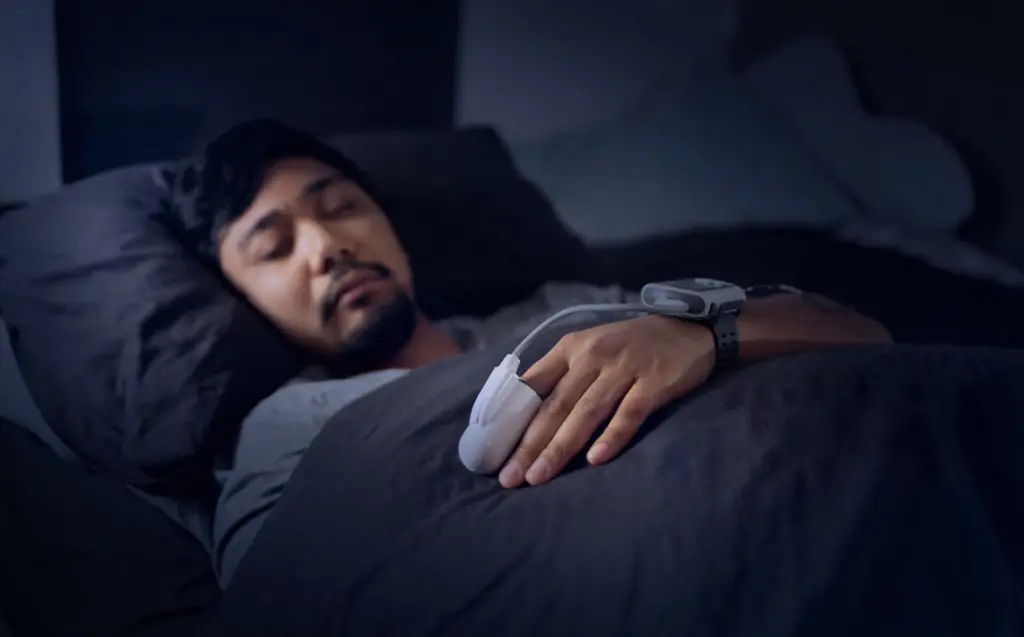
In a perfect world, you’d fall asleep right after your head hits the pillow. But there are times when your sleep is disrupted or unrefreshing. As a result, you’ll experience sleepiness and fatigue during the day.
When this happens, a sleep study can help doctors figure out if something serious is going on with your health. Sleep medicine specialists explain what sleep studies aim to discover and what you can expect before and after having one.
What is a sleep study?
A sleep study tracks a variety of brain, heart and breathing functions as you snooze. It measures things like your heart rate, brain wave activity, eye and muscle movements, and oxygen levels.
Historically, sleep studies have been performed in sleep laboratories. Most sleep labs now are in hotels or comfortable, hotel-like settings. Sleep medicine facilities have moved toward more pleasant environments for sleep laboratories so that they can optimize the experience. The goal is to ensure that people actually sleep during sleep studies.
In Toronto, facilities like the Toronto Sleep Institute, Sleep Disorders Clinic at Toronto Western Hospital, and private clinics across the GTA offer comprehensive sleep testing in comfortable, modern environments. Many of these facilities are designed to feel more like hotel rooms than medical settings.
In some cases, you might be a candidate for an at-home sleep apnea test, which is mostly used to confirm a diagnosis of obstructive sleep apnea in people who already exhibit symptoms of the condition (like snoring or daytime sleepiness). In contrast, a laboratory-based test uses more sensors and can diagnose different kinds of sleep disorders.
What can a sleep study diagnose?
A sleep study can help diagnose sleep-related health conditions. Doctors use the tests to identify many different sleep disorders, including sleep apnea, sleep-related movement disorders and abnormal sleep-related behaviors. From there, your doctor can determine the best treatment plan for you.
Sleep apnea
You may visit a sleep laboratory to be diagnosed with sleep apnea, a condition that causes you to repeatedly stop breathing while you sleep.
Sleep apnea patterns
You could have sleep apnea and other patterns of breathing disturbances. In a sleep study, doctors look for different types of apneas and the effects they have on oxygen levels and brain waves, as well as apneas during specific sleep stages or body positions.
This information can help doctors recommend treatment options for sleep apnea. For example, sleep apnea may be limited to REM sleep and only when you’re sleeping on your back as opposed to your side. In some cases, sleeping off your back may be adequate treatment.
The best sleep apnea therapies
The most common treatment for sleep apnea is positive airway pressure (PAP) or continuous positive airway pressure (CPAP) therapy.
Positive airway pressure therapy is delivered through nasal prongs that fit into your nostrils or a nasal mask that covers your nose. If you breathe through your mouth, you might have a full-face mask that covers your nose and your mouth.
During an in-laboratory sleep study, a technologist will help you find a mask with the best fit so you can adjust to your CPAP device.
Sometimes, this is done during a split-night study, which is a diagnostic test followed by a CPAP trial in the same evening. A technologist may try a variety of mask types and sizes to ensure a good fit and that you’re comfortable. The technologist will also educate you about how to use CPAP and why the therapy is important.
A sleep study is also a great environment to try out treatments for mild to moderate sleep apnea, like mouth guards. Made by a dentist, they’re designed to advance your lower jaw forward to create a more stable airway while you sleep.
Hypersomnia
A sleep study can also help doctors diagnose you with conditions known as hypersomnias. These are in a completely different category than sleep apnea. With hypersomnia, you might have difficulty staying awake during the day. This category of conditions includes narcolepsy.
To be diagnosed with a hypersomnia-related condition, you need an overnight sleep study followed by a daytime nap test. You might be in the sleep lab for as long as 20 or 22 hours to get full testing for a diagnosis.
REM sleep behavior disorder
Parasomnias are abnormal experiences, behaviors and motor activity associated with sleep. One of the more common parasomnias is REM sleep behavior disorder, which happens during the deepest phase of sleep, known as rapid-eye movement (REM) sleep.
Normally, our skeletal muscles are paralyzed in REM sleep. That’s a protective function that prevents us from acting out vivid dream content that occurs in REM sleep.
If you have REM sleep behavior disorder, though, you’re not paralyzed at night as you should be. This can cause you to move and act out your dreams while you’re sleeping. This can cause injuries to you or your bed partners, so early treatment is key.
While REM sleep behavior disorder can be related to medications (like antidepressants), it can also be caused by a lesion in a specific part of your brain that impacts your REM sleep. This disorder can be an early sign of neurodegenerative conditions like Parkinson’s disease, so identifying it early matters.
To be diagnosed with REM sleep behavior disorder, you’ll need an in-laboratory sleep study tailored to the condition. The technologist adds sensors that capture muscle activity of the upper extremities in addition to the chin and leg muscles, in order to measure changes in muscle activity during REM sleep.
What to expect from a sleep study
When you arrive at a sleep lab, the type of study you’re having has already been customized for your individual situation.
This may mean more sensors will be added to your muscles or head to record more detailed brain or muscle activity. Sometimes, adding a specific type of carbon dioxide monitor identifies a symptom associated with sleep apnea that might otherwise go undetected.
Your doctor might even ask you to wear an actigraph in the days leading up to the sleep study. This device, which resembles a motion sensor watch, collects data on circadian rhythm disorder, significant insomnia and hypersomnia disorders.
Sometimes, a single night in the lab doesn’t tell the whole story. Actigraphs are worn for a week or two before the study in order to measure sleep and wake patterns over a longer period of time.
There are different kinds of sleep studies. Here are the major ones.
Overnight sleep study (polysomnogram)
Most diagnostic sleep studies are scheduled at night, typically at 8 p.m. or 9 p.m. For early or late sleepers, though, the studies may be tailored to your bedtime.
For example, sometimes overnight sleep studies are done during the day for people who work the night shift. The goal is to record sleep during your usual sleep period.
Once you get to the lab, you’ll be greeted by a technologist and brought to a private sleep room. Then you’ll be hooked up to a number of sensors. These are located:
On your head, which records brainwaves. Near your nose and mouth, which records airflow. Belts around your chest and abdomen to measure breathing effort. On your arms, legs and under your chin to track body movements. Around your eyes to measure movement there.
Although this seems like a lot of sensors to wear, they help measure different functions. This is important so doctors can identify sleep stages and disorders.
Sleep specialists look to record non-REM sleep as well as REM sleep stages. They record breathing and motor activity during each of those stages, so that they can identify various presentations of sleep disorders.
Multiple sleep latency test
If doctors suspect you have a sleep-wake disorder, they may perform an overnight polysomnogram followed by a multiple sleep latency test (MSLT). This daytime test requires you to take five naps through the day at two-hour intervals.
This is the gold standard test to identify narcolepsy and other disorders characterized by daytime sleepiness. The aim is to measure how easy it is for you to fall asleep and whether you fall into REM sleep.
During the multiple sleep latency test, your brain waves and eye movements will be recorded. That means many of the sensors from the overnight study will be removed in the morning before starting the first nap trial.
Maintenance of wakefulness test
A maintenance of wakefulness test is similar to the multiple sleep latency test. However, instead of asking you to try to take a nap, doctors ask you in a very dim, comfortable lab environment to try to stay awake. Here doctors are measuring your ability to maintain wakefulness in a rather sleep-conducive environment.
This isn’t a diagnostic test like other sleep studies. Instead, doctors often use it to assess whether you can stay awake while you’re under the influence of wake-promoting medications for the treatment of hypersomnia disorders like narcolepsy.
Positive airway pressure (PAP) titration studies
If your doctor thinks you have a sleep-related breathing disorder, they may request an overnight sleep study called a positive airway pressure (PAP) titration. A technologist will monitor your sleep and breathing while you wear a PAP mask the whole night.
The technologist will change pressures and mode of therapy in order to alleviate your sleep apnea. If you have a more complex form of sleep-disordered breathing, they may also monitor your carbon dioxide levels.
How do you prepare for a sleep study?
Sleep specialists want you to have the right test. That may be a home sleep apnea test, or it may be the in-lab test based on your sleep-wake disorder symptoms and your medical history.
An overnight sleep study in a sleep laboratory is attended by a sleep technologist, who monitors your sleep and body positions from a nearby control room. The goal is to capture any abnormal movements while you sleep.
If you’re feeling anxious or stressed about having a sleep study done for the first time, the sleep technologists will also offer you reassurance throughout the process.
None of the sensors used in the sleep laboratory are painful in any way. A mild paste is used to apply some sensors, but it’s easy to remove the next day.
Sleep technologists will do whatever they can to help ensure your comfort during the study. All you have to do is push a button for your technologist, who will unhook you from the sensors if you need to use the restroom or move around to get comfortable.
Here are some other helpful things you can do to prepare in advance for a sleep study.
Read any instructions from your lab
The sleep lab will provide you with instructions before your visit. This information will include the time and duration of your test. For example, you may be in the sleep laboratory for nearly 24 hours if you’re being tested for narcolepsy or hypersomnia.
Most Toronto sleep clinics provide a fair amount of education ahead of time. When a test is ordered, you’ll receive a series of educational materials.
Understanding what to expect can help you plan and keep calm. This is especially important if you’re having a multiple sleep latency test or maintenance of wakefulness test, as both tests are sensitive to your anxiety.
If you’re thinking about leaving early to pick up your child from school, but the test doesn’t end until later, anxiety alone may invalidate the test.
Bring snacks and medication
You’re encouraged to bring snacks and medications. Sleep studies are outpatient procedures generally not located in hospitals where nurses provide medications. So, bringing and taking the medications you normally would take at bedtime and during the day is very important, unless your doctor tells you otherwise.
Dress comfortably
Wear something cozy and comfortable for a sleep study. Just be aware that you’re going to have sensors placed on your chest, abdomen and legs. Wearing something that you’re going to sleep in and that allows you to move around comfortably is important. Make sure this clothing is loose enough to allow the technologist to place sensors in the correct places.
Avoid hair products and acrylic nails
If you typically use a lot of gel or mousse, skip it for your sleep study. After all, you’re going to have sensors applied to your scalp.
Sleep technologists cannot preserve certain types of hairstyles with the amount of paste and sensors that are going to be placed on your head. Avoid acrylic nails, too, which can prevent doctors from getting a good recording of your oxygen levels.
Bring things that make you feel at home
Your comfort is the key to getting accurate results from your sleep study.
The technologists are experts in making it the most sleep conducive environment because they know they need to capture several hours of sleep to make that test worthwhile. They can extend the recording period, and they can allow you to take a break if needed and encourage you to try again so that they can make the most of that nighttime study.
All sleep labs have a bed, of course, and they may also have a recliner. You can bring anything that makes it feel more like home, including your favorite pillow, a cozy blanket and books to read before you fall asleep.
Just be aware that the technologist will ask you to turn off electronics well before lights out so that they don’t interfere with the quality of your sleep.
What happens after a sleep study?
After having a sleep study, it takes a couple of days to process and analyze the collected data. Sleep technologists need to go through every single moment of your sleep, which takes some time. Then, a sleep physician interprets that data and sends the report to your referring provider.
Generally, you should plan on seeing the provider who referred you for a sleep study about a week after the test to make sure that the study has been finalized and the results are available.
Even with all this preparation, a sleep study can still make you anxious. That’s normal.
Most people generally know what they’re getting into, but until you’ve done it, the experience is brand new. You can rest assured that sleep laboratories are clean, the sensors are fresh and new, and technologists are well-trained in making sure that your experience is a good one.
If you’re in the Greater Toronto Area and need a sleep study, your family doctor can refer you to facilities covered under OHIP, including the University Health Network sleep clinics, Sunnybrook Health Sciences Centre, or private accredited sleep labs throughout Toronto, Mississauga, Markham, and surrounding areas. Wait times vary depending on the facility and urgency of your condition, so discuss timing expectations with your referring physician. For more on navigating the healthcare system and wait times, see our guide on how Canadian healthcare actually works.
Poor sleep affects more than just energy levels—it impacts your mental health, your eating habits, and your ability to manage stress. If you’re struggling with fatigue or mood issues alongside sleep problems, you might also want to read about burnout and when to talk to someone.